min read
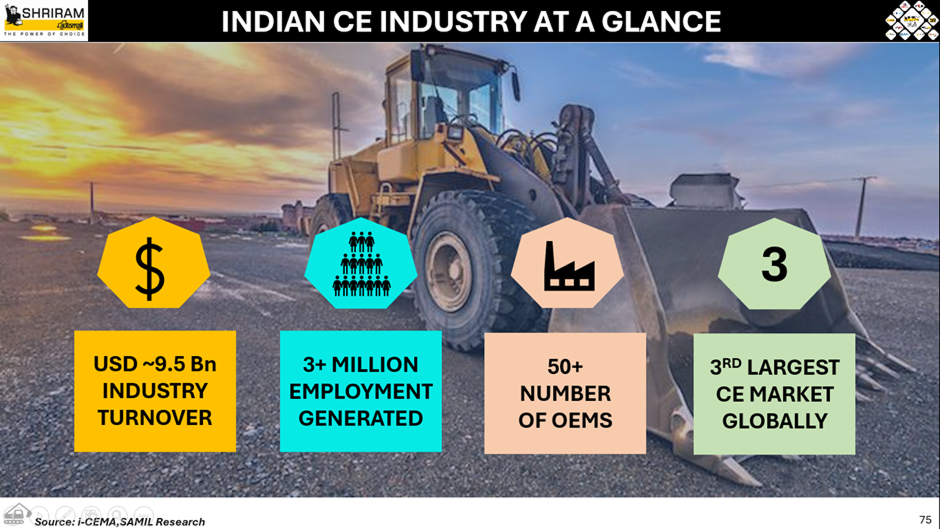
India's equipment industry has long been a cornerstone of the nation's infrastructure and development ambitions. From highways and metros to housing and industrial projects, the sector has consistently powered progress. India's CE industry is powering growth with a turnover of ~USD 9.5 billion, generating 3M+ jobs, and supported by 50+ OEMs. Ranked as the 3rd largest CE market globally, it continues to drive infrastructure through initiatives like Bharatmala, Smart Cities, and PM Gati Shakti.
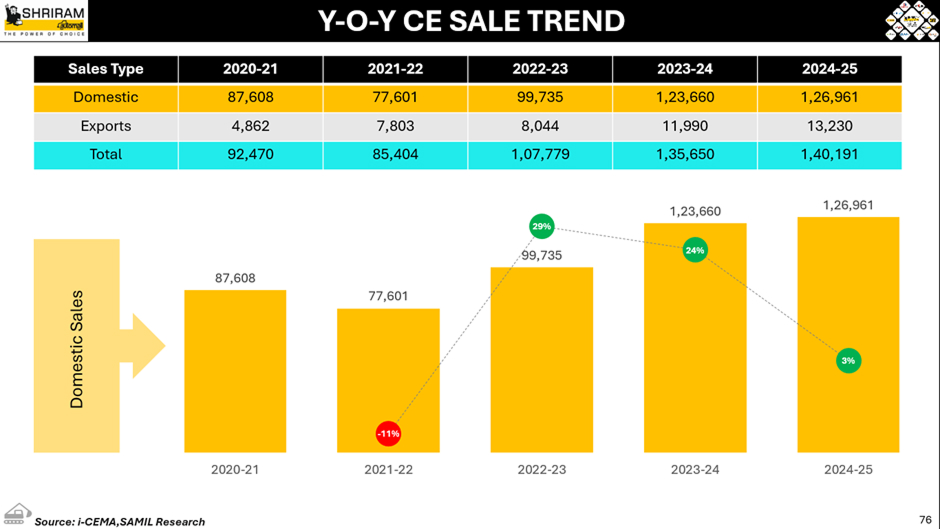
The CE industry has demonstrated resilience, bouncing back strongly after the dip in 2021–22. With total sales (including exports) reaching 1,40,191 units in 2024-25, the industry is on a robust growth path, though future expansion is expected to be steadier compared to the high double-digit growth of previous years. However, the market sustained its upward trajectory, albeit at a slower pace in 2024-25. Domestic sales reached 1,26,961 units, reflecting a 3% growth in 2024-25 from 1,23,600 units in 2023-24.
The government is preparing a ₹16,000 crore incentive scheme to boost domestic manufacturing of key construction equipment such as tunnel boring machines, cranes, and earth movers. Expected to roll out in the next fiscal year, the programme is designed to reduce dependence on imported components from countries like China, Japan, South Korea, and Germany while addressing supply chain bottlenecks.
This policy push comes at a crucial time for India's construction equipment industry, which grew 3% in FY25 and continues to be the world's third-largest market. With infrastructure investment pegged at ₹11.11 lakh crore in FY 2025, demand for machinery is soaring. While the new scheme will strengthen long-term capacity, the immediate challenge of high equipment costs rising 8-10% annually is keeping pre-owned machinery in strong demand as a practical, cost-effective alternative.
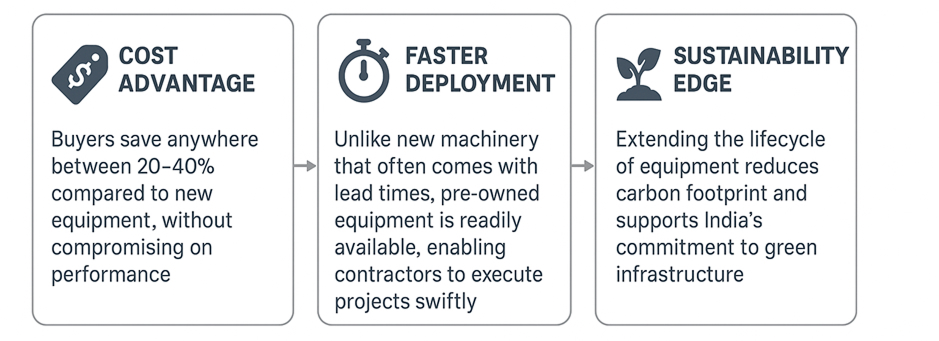
At the same time, the pre-owned construction equipment segment is no longer a by-product of the primary market; it is fast emerging as a parallel growth engine. With infrastructure spending reaching ₹11.11 lakh crore in FY 2025 (as per a report of Economic Times), the demand for equipment has surged across highways, renewable energy, and rural development projects. The escalating cost of brand-new machinery, with average prices rising 8–10% annually, has made pre-owned options increasingly attractive.
For decades, pre-owned equipment was viewed with skepticism, seen as unreliable, under-documented, or unsuitable for long-term projects. Today, that perception is being rewritten. Platforms like Shriram Automall India Limited (SAMIL) have been at the forefront of this transformation, having successfully facilitated the sale of 71,000+ used construction equipment till date. This scale not only reflects industry-wide trust but also proves that pre-owned machines are increasingly viewed as strategic assets, delivering real value without compromising on performance.
The single biggest hurdle in pre-owned equipment adoption has historically been trust. Buyers were uncertain about ownership records, machine health, and fair pricing. That gap is being bridged with technology.
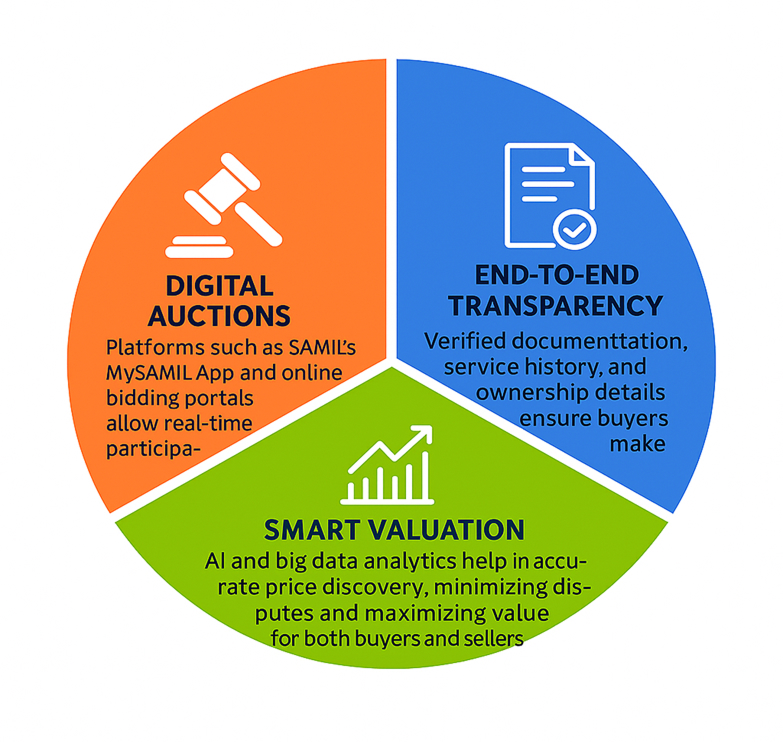
According to Economic Times Reporting, in 2025 alone, digital channels are estimated to contribute nearly 35% of all pre-owned equipment transactions in India, a sharp increase from less than 15% in 2019.
As India accelerates towards its $5 trillion economy vision, infrastructure will continue to be its backbone. The availability of reliable, affordable equipment is crucial to keep projects on schedule and budgets under control. Pre-owned equipment fills this critical gap, empowering contractors, MSMEs, and rural entrepreneurs to participate in nation-building without being held back by prohibitive costs.
SAMIL emphasizes, "the real value of India's growth lies not just in creating new assets but in unlocking the hidden potential of existing ones." By driving accessibility, and trust, the pre-owned equipment industry is not just keeping pace with India's development, it is actively shaping it.
The road ahead is clear: India's pre-owned equipment market is set to expand rapidly, contributing to efficiency, sustainability, and inclusive growth. With structured platforms, advanced digital tools, and strong demand drivers, the segment is evolving into an indispensable pillar of the nation's infrastructure push.
For India, tapping into the hidden potential of pre-owned equipment isn't just an economic choice, it's a strategic imperative.
A Comprehensive Year-End Analysis of India's Pre-Owned Automotive Industry
AI in Auto Auctions: Predicting Demand, Pricing & Future Inventory
SAMIL Shines at Bharat Mobility Global Expo 2025: A Game Changer for the Pre-Owned Vehicle Market
CIRCULAR ECONOMY & PRE-OWNED ASSETS: A SUSTAINABLE FUTURE
Community Engagement: SAMIL's Commitment to Social Responsibility