6 min read

India's automobile industry has long reflected the country's economic aspirations. As infrastructure expands, businesses grow and consumer expectations evolve, mobility continues to connect people, markets and opportunities across the country.
The first half of FY2026-27 has reinforced this relationship. Demand has grown across passenger vehicles, two-wheelers, three-wheelers, commercial vehicles, tractors and construction equipment, reflecting the diverse needs of India's consumers and businesses.
According to the Federation of Automobile Dealers Associations (FADA), India recorded 1,55,12,319 vehicle retail sales between April and September 2026, registering year-on-year growth of 20.77%. This was the best first half of any financial year for India's automobile retail market.
Beyond the headline numbers, the market is undergoing several important shifts. Electric mobility is gaining ground, rural and urban markets are contributing to demand in different ways, and the need for greater efficiency across the vehicle ownership lifecycle is becoming increasingly important.
At SAMIL, we see these developments as an opportunity to look beyond vehicle sales and understand how the entire mobility and asset ecosystem is evolving.
The first half of FY2026-27 delivered growth across all six major vehicle and equipment categories tracked by FADA. Passenger vehicles, two-wheelers, three-wheelers, commercial vehicles and tractors recorded double-digit year-on-year growth, while wheeled construction equipment remained in positive territory.
Passenger vehicles led the growth among the major categories, registering an increase of 24.48%. Commercial vehicles grew by 21.48%, followed by two-wheelers at 20.43%, tractors at 19.81% and three-wheelers at 14.98%. Wheeled construction equipment recorded growth of 1.56%.
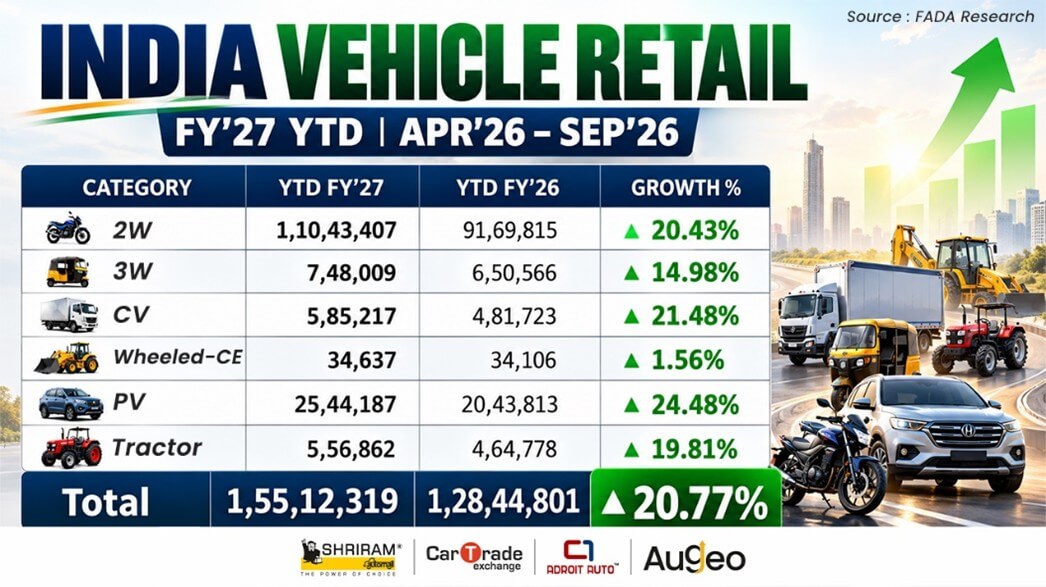
What makes this performance particularly significant is the diversity of demand behind it. Passenger vehicle growth reflects household mobility needs and changing consumer preferences. Commercial vehicle demand is closely linked to goods movement, logistics, and infrastructure activity, while tractors serve agricultural requirements and wheeled construction equipment supports infrastructure and development projects.
For the industry, the opportunity lies in supporting the automotive industry's growth with efficient distribution, financing, reliable asset information, and stronger resale channels.
Electric mobility is becoming an increasingly important part of India's automotive landscape. However, the transition is progressing at different speeds across vehicle categories, shaped by their intended use, operating economics, infrastructure requirements, and customer needs.
FADA's September 2026 data highlight this shift through the rising share of electric vehicles in retail sales compared with September 2025.
Two-wheeler EV penetration increased from 8.17% to 11.58%, while passenger vehicle EV penetration rose from 5.74% to 8.45%. Three-wheelers continued to lead electric adoption, with penetration increasing from 56.65% to 64.90%. Commercial vehicle EV penetration also grew, moving from 2.16% to 4.04%.
Across categories, total EV retail reached an all-time monthly high of approximately 3.34 lakh units in September 2026, with overall EV penetration at around 13%.
These differences across categories are worth examining. Electric three-wheelers have established a substantial presence in their segment, while two-wheelers are seeing wider adoption and passenger vehicles are gradually gaining ground. Commercial vehicle electrification is also progressing, although its adoption remains comparatively lower.
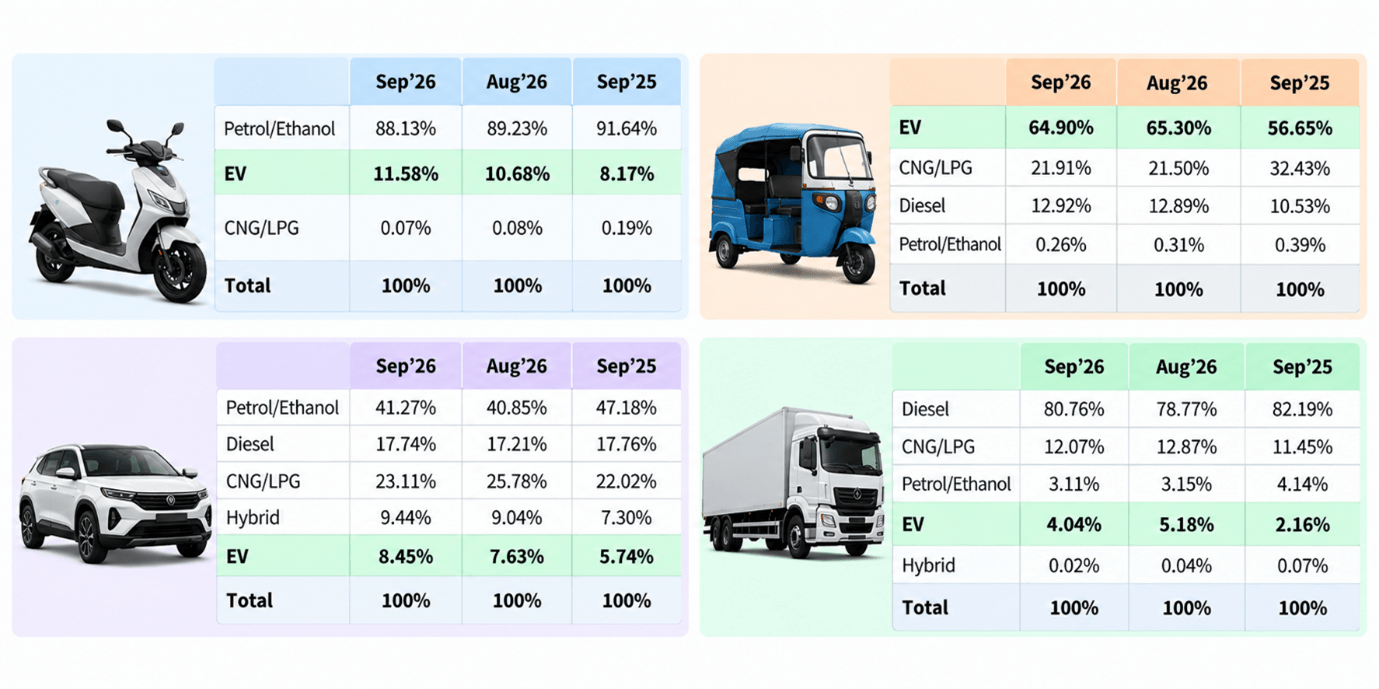
For the industry, the transition extends well beyond the initial purchase. Battery health, charging infrastructure, operating costs, financing, and residual value will increasingly influence ownership decisions.
The secondary market will also need to evolve. Reliable EV inspections, transparent valuations and a better understanding of battery condition will be essential to building confidence in pre-owned electric vehicles.
India's automotive market is shaped by a diverse set of consumers, businesses and regional requirements. Rural and urban markets contribute differently to vehicle demand, making it important to understand both their year-on-year performance and their shorter-term movement.
FADA's September 2026 data shows that overall vehicle retail grew by 32.69% year-on-year in rural markets and 30.93% in urban markets. Rural India therefore recorded stronger annual growth during the month.
However, the month-on-month picture was different. Urban retail grew by 6.26% over August, compared with 3.24% in rural markets. This indicates that the sequential festive-season pickup was stronger in urban markets, even as rural markets led the year-on-year comparison.
Passenger vehicles recorded almost identical year-on-year growth in both geographies, at 32.11% in urban markets and 32.09% in rural markets. Commercial vehicles also saw stronger annual growth in rural markets, at 40.44%, compared with 35.15% in urban markets.
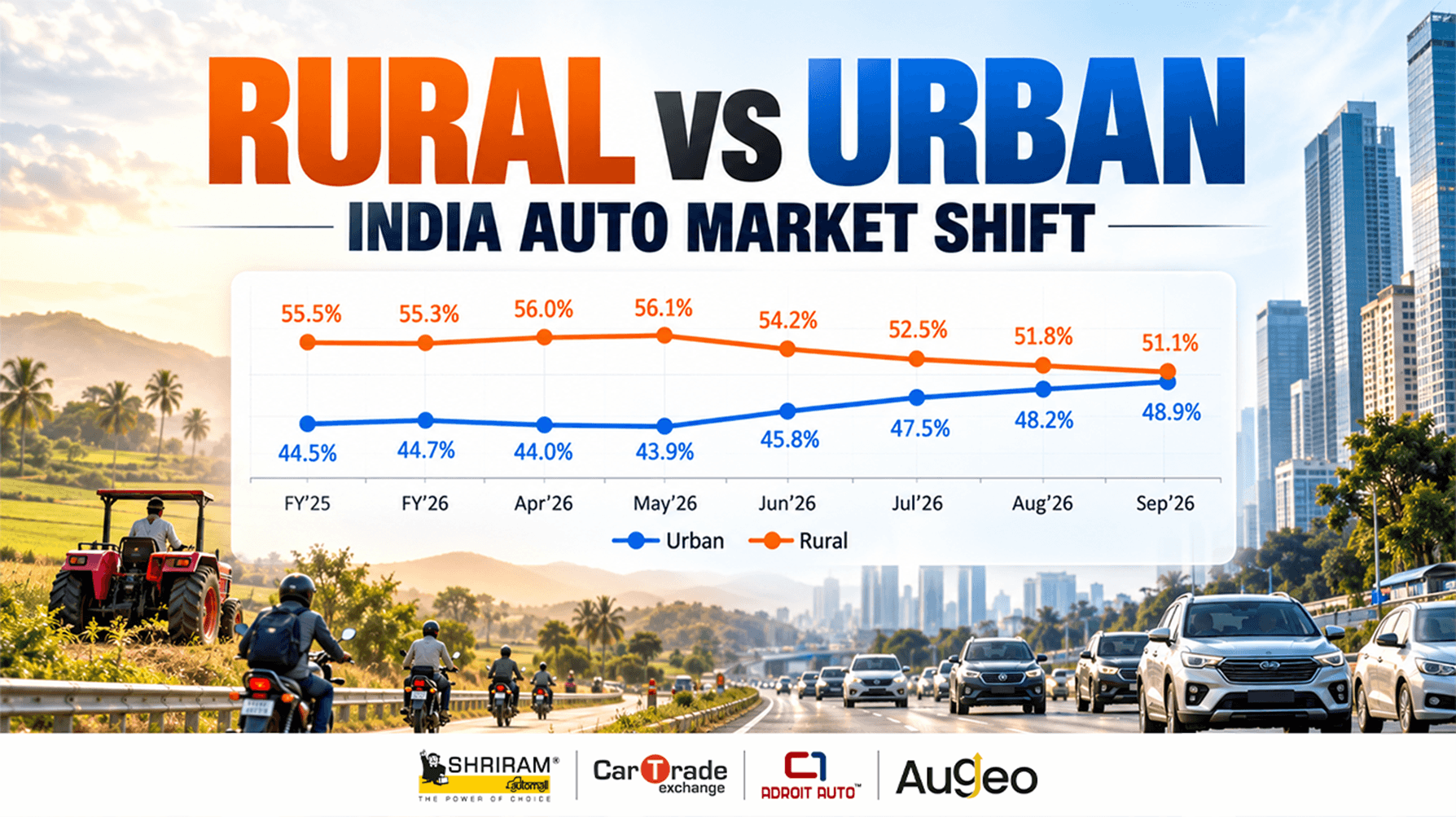
These trends underline the importance of looking beyond national averages. Rural and semi-urban markets contribute to demand through agricultural activity, local businesses, transportation and income-generating assets. Urban markets have their own mobility requirements, shaped by commuting needs, consumption patterns and business activity.
For the automotive industry, the implication is clear: understanding where demand originates, what customers need and how assets are used can support better decisions across sales, financing and resale. At SAMIL, this broader perspective is central to the role of an organised asset marketplace. By bringing buyers and sellers together through physical and digital channels, the secondary market can improve access, price discovery and asset utilisation across geographies.
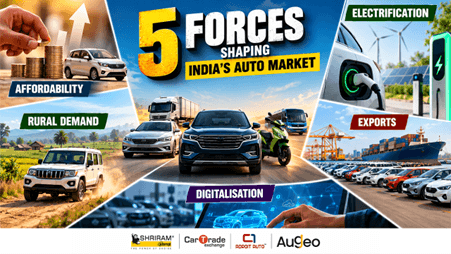
The outlook for India's automobile industry remains encouraging, but sustaining the momentum will require a balance between consumer demand, affordability, inventory management and the ability to convert festive interest into actual purchases.
FADA's October 2026 outlook reflects cautious optimism. Around 75.57% of dealers expect sales to grow during October, while 19.46% anticipate a flat market and 4.98% expect a decline. For the October–December 2026 period, 78.28% of dealers expect growth. FADA also reports that 49.5% of dealers have revised their FY2027 outlook upwards following the record first half, compared with 16% who have revised it downwards.
These expectations point to confidence in the festive season, wedding-related purchases and year-end demand. However, they need to be viewed alongside the base effect from the previous year's post-GST 2.0 demand surge. Affordability as a key factor can also influence the next phase of growth. The coming months will therefore test the industry's ability to convert bookings and festive interest into sustainable retail growth without compromising affordability or inventory discipline.
At SAMIL, we believe this is where the opportunity extends beyond the primary market. As the vehicle and equipment base expands, the importance of resale, exchange, inspections, valuations and auctions will grow alongside new-asset sales.
The first half of FY2026-27 provides several reasons to be optimistic about India's automobile industry. Retail demand has grown across major categories, electric mobility is gaining ground, and both rural and urban markets continue to contribute to the country's mobility story. The next phase, however, will be defined by more than the number of vehicles sold. It will depend on how effectively the industry responds to evolving customer expectations, manages affordability and adopts technology to improve the ownership experience.
Every vehicle and equipment asset moves through multiple stages, from purchase and utilisation to resale, exchange and eventual disposal. Making these transitions more transparent and efficient can unlock value for buyers, sellers, financiers and businesses.
At SAMIL, our experience across auctions, inspections, valuations and digital marketplaces reinforces our belief that the future of India's automobile industry lies in creating value across the entire lifecycle of an asset.
India's automobile industry has demonstrated its ability to grow. The next challenge is to make that growth smarter, more sustainable, and more valuable for everyone across the ecosystem.
A Comprehensive Year-End Analysis of India's Pre-Owned Automotive Industry
AI in Auto Auctions: Predicting Demand, Pricing & Future Inventory
SAMIL Shines at Bharat Mobility Global Expo 2025: A Game Changer for the Pre-Owned Vehicle Market
CIRCULAR ECONOMY & PRE-OWNED ASSETS: A SUSTAINABLE FUTURE
Community Engagement: SAMIL's Commitment to Social Responsibility